Dawn Hoogeveen’s Op-Ed “Outdated mining rules trump privacy in B.C.” was published in the January 31, 2013 Times Colonist. Read the full Op-Ed here.

Image: Dawn Hoogeveen
Dawn Hoogeveen’s Op-Ed “Outdated mining rules trump privacy in B.C.” was published in the January 31, 2013 Times Colonist. Read the full Op-Ed here.
Image: Dawn Hoogeveen
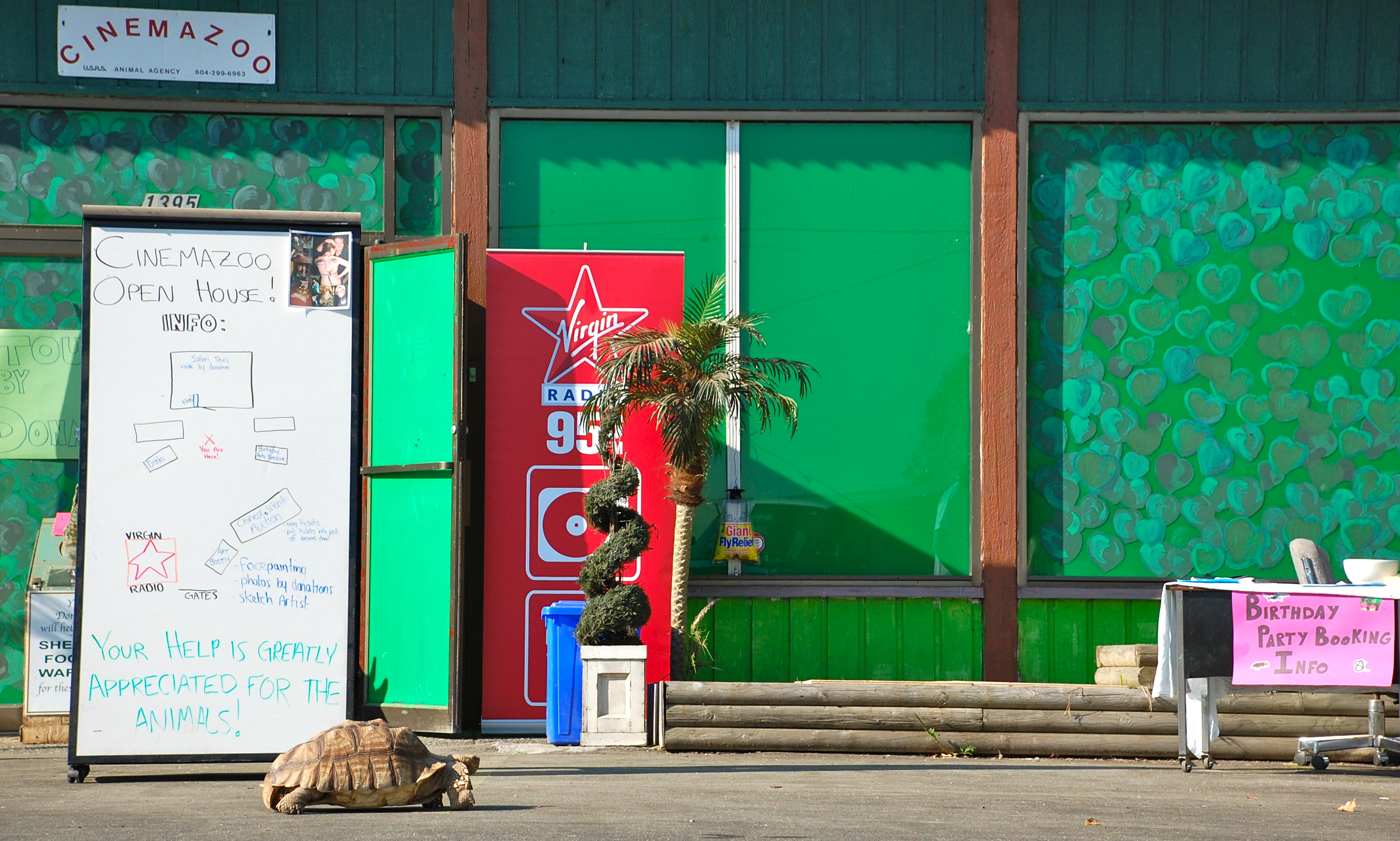
Photo by Rosemary Collard: Dozer the tortoise in front of Cinemazoo in White Rock, British Columbia.
Rosemary Collard’s article “Apocalypse Meow” was recently published in Capitalism Nature Socialism 24(1), 35-41. Read the full article here.
Dr. Juanita Sundberg’s intervention “Delimiting democracy: witnessing along the US–Mexico borderlands” has gone to press in the collection Till, K.E., et al., “Interventions in the political geographies of walls,” Political Geography (2013).  Dr. Sundberg’s contribution examines the implications for democracy of wall building at the US border with Mexico. See more in the full collection.
Photo by Juanita Sundberg: The Río Bravo/Rio Grande river as a symbol of unity not division: No Border Wall
protest, Texas, 2008.
 In November 2012, the UBC Geography Department hosted the Decolonizing Cascadia? Rethinking Critical Geographies 7th Annual Mini-Conference. Among the diverse critical geography papers presented throughout the weekend were Paige Patchin’s “Three Scenes of Everyday Imperialism” and Leigh Barrick’s “Porous Boundaries and Rugged Terrain: Nature the Production of the U.S. Northern Border.” Sarah Brown, Rosemary Collard and Dawn Hoogeveen presented their paper “Pedagogical Declarations: Feminist Engagements with the ‘Teaching Statement.'” Together with fellow UBC geographer Max Ritts, Rosemary Collard also presented “Rodeo Days: Animal Afterlives and Archival Politics.”
Image: Logo designed by Sam Walker.
Cascadia map modified from Cascadianow’s map on Wikimedia Commons, available here.
Modified and distributed under a Creative Commons Attribution-ShareAlike 3.0 Unported (CC BY-SA 3.0) License.
 Juanita and Leigh participated in the August 2012 Sierra Club Borderlands Team meeting based out of Tucson, Arizona. Team trips to Organ Pipe Cactus National Monument and the San Pedro Riparian National Conservation Area revealed the impacts of Homeland Security infrastructure on borderlands wildlife corridors, ecosystems and communities. Of particular concern were the yearly rains that pass through desert washes currently bisected by vast sections of fencing. Many styles of fencing in use do not allow debris and sediment to wash through, as we saw at several sites with mounds on the south side of the fence reaching six feet high.
Photo: Leigh Barrick

Two scarlet macaws at ARCAS Wildlife Rehabilitation Centre, Guatemala – as smart and sharp-beaked as they look!
Last month at the Taking Animals Apart conference at the University of Wisconsin – Madison, Rosemary workshopped her paper, “Putting animals back together / taking commodities apart”, for journal submission. The paper is based on participant-observation research she conducted at ARCAS Wildlife Rehabilitation Centre in northern Guatemala. Each year ARCAS receives 200-700 animals: cardboard boxes stuffed with baby parrots, crates full of lizards, monkeys with leashes ringing their necks. Most of these animals were confiscated while being either smuggled for the pet trade or kept illegally as pets. Seized animals represent a fraction of overall trade in and out of Guatemala, and of global trade, worth hundreds of billions of dollars annually. Forming wild animals into commodities within this sprawling bio-economy’s circuits is accomplished by severing animals from their social, ecological, and familial networks – “taking animals apart” – and replacing these systems with human-provided supports: food, shelter, diversion. ARCAS’s animals, however, fail to fully materialize as such biocapital, and yet remain alive. “Rehabilitating” these failed commodities – or putting these traumatized and often ill animals back together – for successful return to the wild often takes years, and is attempted through various biopolitical and misanthropic technologies that aim to divest animals of ties to humans, and ultimately destroy these links entirely. Rosemary’s objective is to shed light on the unique dual processes of making and unmaking live commodities – or taking animals apart and putting them back together – and to consider their political and ethical preconditions, as well as implications for geographical theorizing.
For more detail about the conference, see takinganimalsapart.weebly.com, or Rosemary’s Artemia blog post: blogs.ubc.ca/artemia/2012/06/05/life-meets-death-in-a-flesh-eating-beetle-colony.
Photo: Rosemary Collard
 A section of the United States border fence in the Rio Grande Valley visited during the conference.
Photo: Leigh Barrick
 Juanita Sundberg, Alex Pysklywec and Leigh Barrick gave presentations at the College of Social and Behavioral Sciences 6th Annual Research Conference at the University of Texas-Pan American.The conference was held at the Edinburg, Texas campus from April 12-13, 2012.
See the summary of one panel written by Dr. Gary Mounce for the Rio Grande Guardian.
Photo: Juanita Sundberg
Leigh with Dr. Rocio Magaña at the University of Texas-Pan American.
Photo: Juanita Sundberg

